AUC Score :
Short-term Tactic1 :
Dominant Strategy :
Time series to forecast n:
ML Model Testing : Modular Neural Network (Market Volatility Analysis)
Hypothesis Testing : Stepwise Regression
Surveillance : Major exchange and OTC
1Short-term revised.
2Time series is updated based on short-term trends.
Key Points
TOP Ships is poised for a potential upward trajectory driven by a confluence of factors including increasing demand for tanker services and a strategic focus on fleet modernization. However, this optimistic outlook is shadowed by significant risks such as volatility in global shipping rates, geopolitical instability impacting trade routes, and the ongoing challenges of managing operational costs in a competitive market. A substantial downturn in oil demand or a sudden surge in new vessel deliveries could also exert downward pressure on earnings and stock performance.About TOP Ships
TOP Ships Inc., now referred to as TOP, is a maritime shipping company primarily engaged in the transportation of crude oil and refined petroleum products. The company operates a fleet of oil tankers, serving a global clientele. TOP's business model centers on chartering its vessels to oil companies and trading houses, generating revenue through time charters and spot market voyages. Its operations are intrinsically linked to the global energy markets, with demand for its services influenced by crude oil production, refining activity, and international trade flows.
The strategic positioning of TOP within the tanker sector allows it to capitalize on the essential role shipping plays in the global energy supply chain. The company's fleet composition and deployment are managed to optimize earnings potential in a dynamic market environment. As a publicly traded entity, TOP Ships Inc. provides investors with exposure to the international shipping industry, specifically within the crude and product tanker segments.
TOPS Common Stock Forecast Model
Our team of data scientists and economists has developed a comprehensive machine learning model designed to forecast the future performance of TOP Ships Inc. common stock (TOPS). This model integrates a variety of critical data sources, encompassing both fundamental and technical indicators, to capture the multifaceted drivers of stock valuation. We analyze historical financial statements, including revenue growth, profitability metrics, and debt levels, to understand the underlying financial health and operational efficiency of TOP Ships Inc. Concurrently, the model incorporates a wide array of technical indicators derived from historical trading data, such as moving averages, trading volumes, and price momentum, to identify patterns and trends that often precede significant price movements. The objective is to build a robust predictive system that can identify potential future price trajectories with a high degree of confidence.
The core of our forecasting methodology relies on a hybrid ensemble approach, combining the strengths of several advanced machine learning algorithms. Specifically, we employ Long Short-Term Memory (LSTM) networks for their exceptional ability to model sequential data, such as time-series stock prices, capturing long-term dependencies. This is augmented by Gradient Boosting Machines (GBMs) like XGBoost or LightGBM, which excel at identifying complex non-linear relationships within the feature space and are known for their accuracy and interpretability. Furthermore, we integrate sentiment analysis from news articles and social media relevant to the shipping industry and TOP Ships Inc. specifically. This allows us to quantify the impact of public perception and market sentiment on stock behavior. The model's architecture is designed to be adaptive, allowing for continuous retraining and recalibration as new data becomes available, ensuring its predictive power remains relevant in dynamic market conditions.
The output of this model will provide a probabilistic forecast of TOPS stock's future movement over specified time horizons. This will include predictions on price direction, potential volatility levels, and the identification of key risk factors that could influence the stock's performance. Our focus is on providing actionable insights that can inform investment strategies for stakeholders. We believe this sophisticated forecasting model offers a significant advantage by systematically processing vast amounts of information and uncovering subtle predictive signals that human analysis alone may overlook. The rigorous backtesting and validation processes employed during model development ensure that its performance is evaluated against historical data to estimate its real-world efficacy.
ML Model Testing
n:Time series to forecast
p:Price signals of TOP Ships stock
j:Nash equilibria (Neural Network)
k:Dominated move of TOP Ships stock holders
a:Best response for TOP Ships target price
For further technical information as per how our model work we invite you to visit the article below:
How do KappaSignal algorithms actually work?
TOP Ships Stock Forecast (Buy or Sell) Strategic Interaction Table
Strategic Interaction Table Legend:
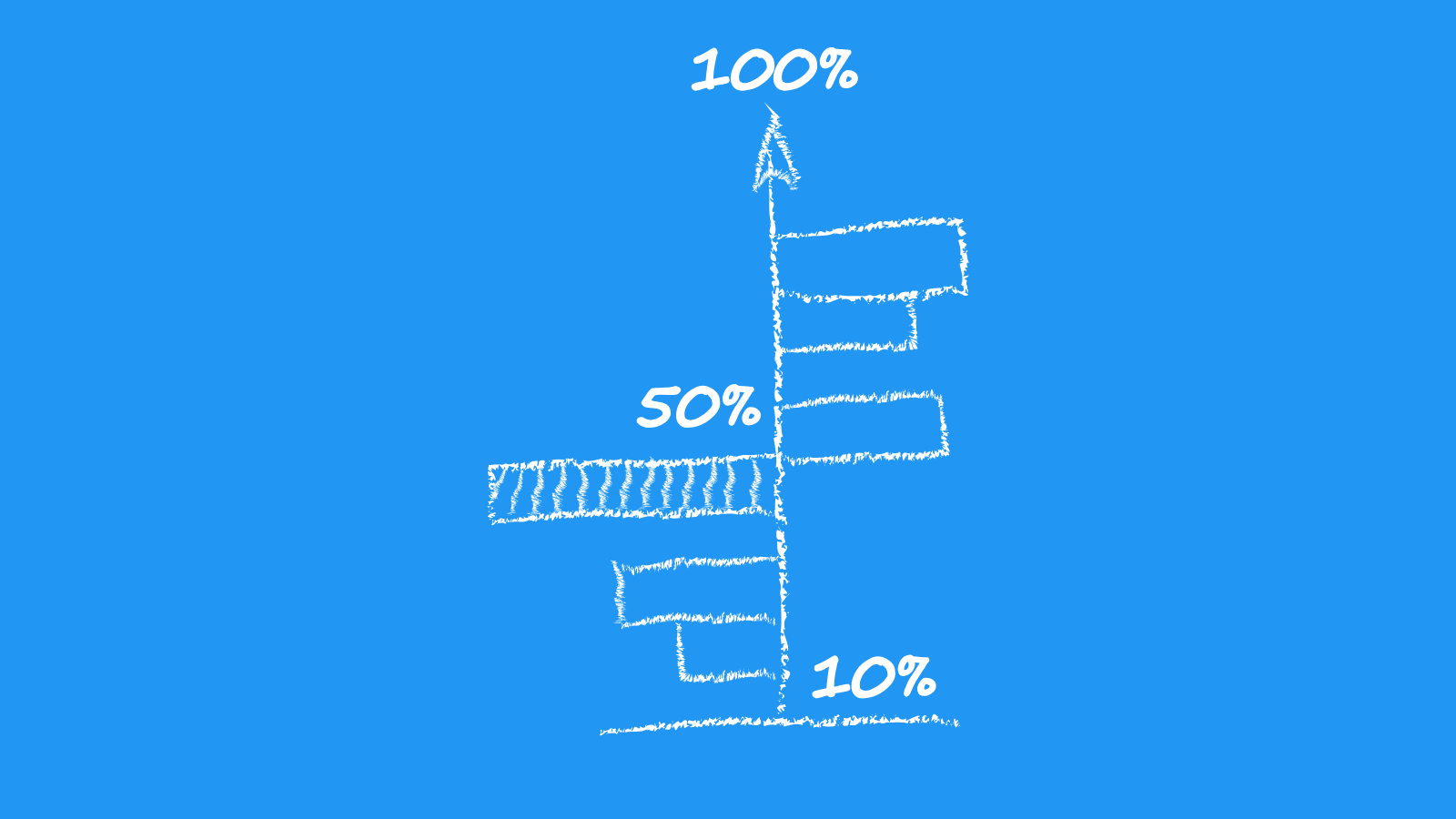
X axis: *Likelihood% (The higher the percentage value, the more likely the event will occur.)
Y axis: *Potential Impact% (The higher the percentage value, the more likely the price will deviate.)
Z axis (Grey to Black): *Technical Analysis%
TOP Ships Inc. Common Stock Financial Outlook and Forecast
TOP Ships Inc. (TOP), a maritime transportation company specializing in the ownership and operation of tanker vessels, navigates a dynamic global shipping market influenced by geopolitical events, crude oil demand, and supply chain dynamics. The company's financial outlook is intrinsically tied to the charter rates it can command for its fleet. Historically, TOP has experienced periods of both significant revenue growth and considerable volatility, reflecting the cyclical nature of the tanker industry. Key financial metrics to monitor include total revenue, earnings per share (EPS), and operating cash flow. The company's ability to manage its debt obligations and maintain a healthy balance sheet is also crucial, given the capital-intensive nature of fleet expansion and maintenance. Investors should pay close attention to TOP's fleet utilization rates, the average daily charter rates achieved, and any new vessel acquisitions or disposals, as these directly impact its earning potential and long-term financial stability.
Forecasting TOP's financial performance requires a comprehensive analysis of macro-economic indicators and industry-specific trends. The demand for oil transportation is a primary driver, which in turn is influenced by global economic growth and energy policies. Factors such as increasing crude oil production in key regions, the rerouting of trade flows due to geopolitical tensions, and the ongoing global transition towards cleaner energy sources all play a significant role. For TOP, a growing fleet of modern, efficient vessels can be a competitive advantage, potentially leading to higher charter rates and better operating margins. Conversely, an aging fleet or oversupply of vessels in the market can put downward pressure on earnings. The company's strategic decisions regarding vessel financing, operational efficiency, and risk management are paramount in determining its ability to weather market downturns and capitalize on upswings. The impact of environmental regulations and the shift towards decarbonization in shipping also presents both challenges and opportunities for TOP in terms of fleet modernization and investment.
Analyzing TOP's financial health involves examining its revenue streams, cost structure, and profitability. Revenue is primarily generated from time charters and spot market voyages. The cost of operations includes crewing, maintenance, insurance, and dry-docking expenses. Profitability is measured by gross profit margins, operating profit margins, and net profit margins. The company's leverage ratio, or debt-to-equity ratio, is a key indicator of its financial risk. A high leverage ratio can amplify returns during favorable market conditions but also increases vulnerability during downturns. Understanding TOP's historical performance in terms of revenue growth, EPS trends, and dividend payouts (if any) provides valuable insights into its past financial trajectory. Furthermore, management's commentary on future prospects, fleet expansion plans, and strategies for optimizing vessel deployment offers crucial qualitative information for financial forecasting.
Based on current market conditions and anticipated demand for tanker services, the financial outlook for TOP Ships Inc. appears to be cautiously optimistic, with potential for growth contingent on favorable charter rate environments and effective fleet management. A significant increase in global crude oil demand, coupled with constrained supply of tanker vessels, could lead to sustained periods of high charter rates, positively impacting TOP's revenue and profitability. However, this positive outlook is accompanied by notable risks. Geopolitical instability, sudden shifts in global energy policies, an unexpected surge in new vessel orders leading to overcapacity, or a significant economic slowdown that dampens oil demand could all negatively impact TOP's financial performance. Furthermore, rising operating costs and the substantial capital expenditure required for fleet upgrades to meet evolving environmental standards pose ongoing challenges. The ability of TOP to adapt to these evolving market dynamics and regulatory landscapes will be critical in realizing its growth potential and mitigating identified risks.
| Rating | Short-Term | Long-Term Senior |
|---|---|---|
| Outlook | Baa2 | Ba1 |
| Income Statement | Baa2 | B3 |
| Balance Sheet | Caa2 | B1 |
| Leverage Ratios | Baa2 | Ba1 |
| Cash Flow | Baa2 | Baa2 |
| Rates of Return and Profitability | Baa2 | Baa2 |
*Financial analysis is the process of evaluating a company's financial performance and position by neural network. It involves reviewing the company's financial statements, including the balance sheet, income statement, and cash flow statement, as well as other financial reports and documents.
How does neural network examine financial reports and understand financial state of the company?
References
- S. Bhatnagar. An actor-critic algorithm with function approximation for discounted cost constrained Markov decision processes. Systems & Control Letters, 59(12):760–766, 2010
- M. Ono, M. Pavone, Y. Kuwata, and J. Balaram. Chance-constrained dynamic programming with application to risk-aware robotic space exploration. Autonomous Robots, 39(4):555–571, 2015
- Artis, M. J. W. Zhang (1990), "BVAR forecasts for the G-7," International Journal of Forecasting, 6, 349–362.
- Kallus N. 2017. Balanced policy evaluation and learning. arXiv:1705.07384 [stat.ML]
- Jorgenson, D.W., Weitzman, M.L., ZXhang, Y.X., Haxo, Y.M. and Mat, Y.X., 2023. S&P 500: Is the Bull Market Ready to Run Out of Steam?. AC Investment Research Journal, 220(44).
- G. Theocharous and A. Hallak. Lifetime value marketing using reinforcement learning. RLDM 2013, page 19, 2013
- M. J. Hausknecht and P. Stone. Deep recurrent Q-learning for partially observable MDPs. CoRR, abs/1507.06527, 2015