AUC Score :
Short-term Tactic1 :
Dominant Strategy :
Time series to forecast n:
ML Model Testing : Multi-Instance Learning (ML)
Hypothesis Testing : Statistical Hypothesis Testing
Surveillance : Major exchange and OTC
1Short-term revised.
2Time series is updated based on short-term trends.
Key Points
Sangoma's future trajectory likely involves continued growth fueled by its diversified portfolio of communication solutions, though this expansion carries inherent risks. A key prediction is that the company will solidify its market position through strategic acquisitions and integration of new technologies. However, the prediction of successful integration is counterbalanced by the risk of overpaying for acquisitions or failing to realize anticipated synergies. Another prediction is that Sangoma will benefit from the ongoing demand for cloud-based communication services, but this is accompanied by the risk of increasing competition from larger, well-established players and potential disruptions in the global supply chain impacting hardware-dependent offerings.About Sangoma Technologies
Sangoma Technologies Corporation is a global provider of secure and reliable communications solutions. The company focuses on delivering a comprehensive suite of unified communications and collaboration services designed to enhance business productivity. Their offerings encompass a range of products and services, including cloud-based unified communications, networking solutions, and customer engagement tools. Sangoma serves a diverse customer base across various industries, emphasizing the importance of interoperability and seamless integration in modern business environments.
Sangoma's strategy revolves around providing businesses with the essential tools to communicate and collaborate effectively, regardless of their location or the devices they use. They are committed to delivering robust, scalable, and secure solutions that support the evolving needs of businesses in an increasingly connected world. The company's dedication to innovation and customer satisfaction underpins its position as a key player in the communications technology sector.
Sangoma Technologies Corporation Common Shares Stock Forecast Model
As a combined team of data scientists and economists, we propose a comprehensive machine learning model to forecast the future trajectory of Sangoma Technologies Corporation (SANG) common shares. Our approach leverages a multi-faceted strategy, integrating historical stock performance with macroeconomic indicators and company-specific fundamental data. We will employ time-series forecasting techniques such as ARIMA and LSTM networks to capture intricate temporal dependencies within SANG's stock price movements. Concurrently, we will incorporate external factors like interest rate changes, inflation data, and industry-specific growth trends that have historically influenced technology stock valuations. The model's architecture will prioritize robustness, aiming to discern underlying patterns and predict potential price shifts with a reasonable degree of accuracy, acknowledging the inherent volatility of the equity markets.
The data pipeline for this model is critical. We will meticulously collect and clean data from reputable financial data providers, encompassing daily, weekly, and monthly historical SANG stock prices, trading volumes, and relevant market indices. Our economic data will draw from government statistics and reputable financial news sources, focusing on indicators that demonstrably correlate with technology sector performance. For company fundamentals, we will analyze SANG's quarterly earnings reports, revenue growth, debt levels, and competitive landscape. Feature engineering will play a pivotal role, creating new variables from existing data to enhance the model's predictive power. This will include calculating moving averages, volatility measures, and identifying key event dates that may have impacted past stock performance. Data preprocessing will involve normalization and handling of missing values to ensure the integrity of the input for our machine learning algorithms.
Our model's evaluation will be rigorous, employing standard metrics such as Mean Squared Error (MSE), Root Mean Squared Error (RMSE), and Mean Absolute Percentage Error (MAPE) to quantify forecasting accuracy. We will implement cross-validation techniques to ensure the model generalizes well to unseen data and to avoid overfitting. Furthermore, we will conduct backtesting to simulate real-world trading scenarios and assess the model's profitability and risk-adjusted returns. The iterative nature of model development means we will continuously refine our algorithms, hyperparameters, and feature sets based on ongoing performance analysis and emerging market dynamics. The ultimate goal is to provide a sophisticated tool for informed investment decisions concerning Sangoma Technologies Corporation common shares.
ML Model Testing
n:Time series to forecast
p:Price signals of Sangoma Technologies stock
j:Nash equilibria (Neural Network)
k:Dominated move of Sangoma Technologies stock holders
a:Best response for Sangoma Technologies target price
For further technical information as per how our model work we invite you to visit the article below:
How do KappaSignal algorithms actually work?
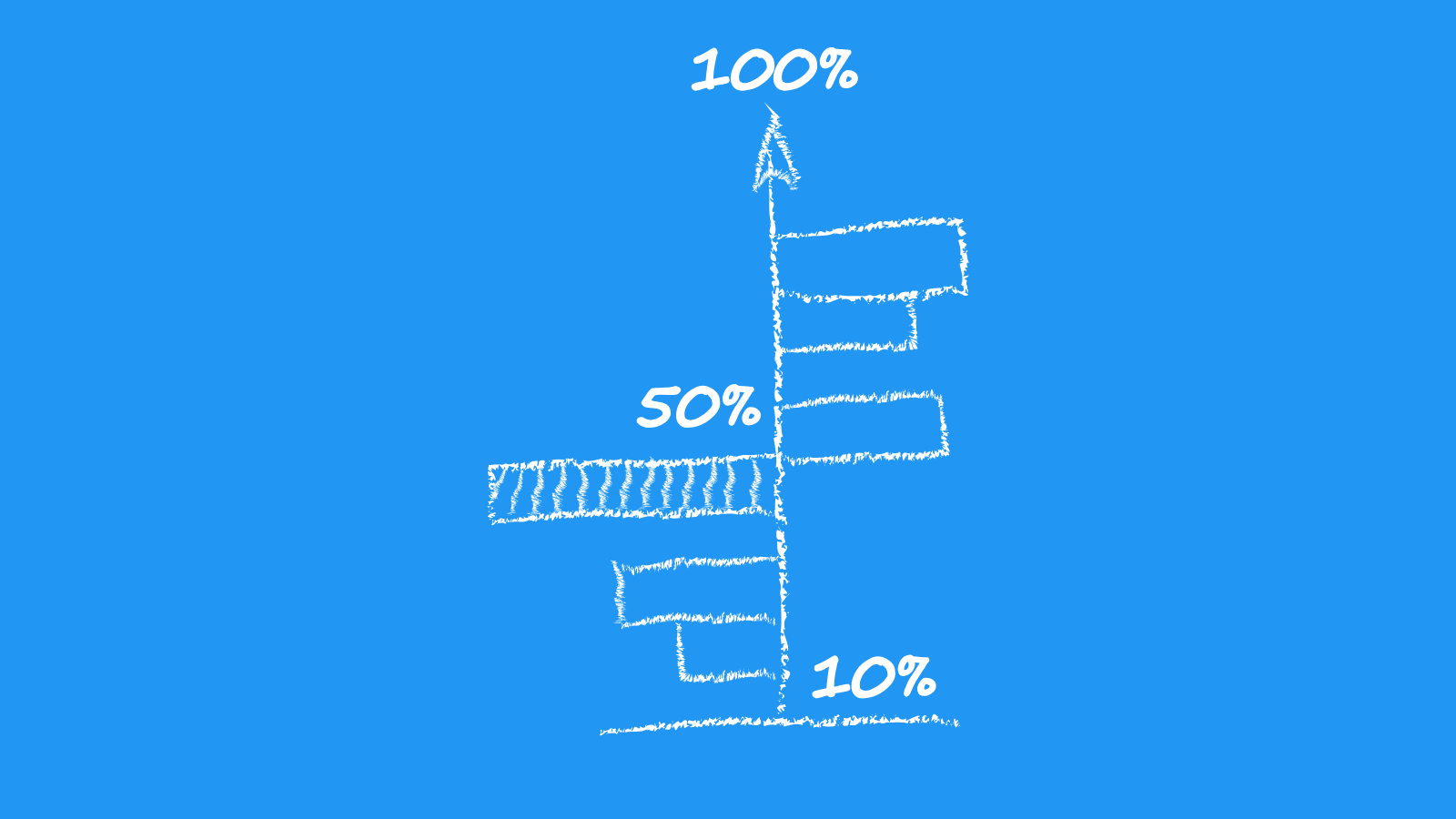
Sangoma Technologies Stock Forecast (Buy or Sell) Strategic Interaction Table
Strategic Interaction Table Legend:
X axis: *Likelihood% (The higher the percentage value, the more likely the event will occur.)
Y axis: *Potential Impact% (The higher the percentage value, the more likely the price will deviate.)
Z axis (Grey to Black): *Technical Analysis%
Sangoma Technologies Corporation Financial Outlook and Forecast
Sangoma Technologies Corporation, a prominent player in the unified communications and collaboration market, is poised for a period of continued evolution and potential growth, underpinned by its strategic acquisitions and ongoing innovation in cloud-based solutions. The company's financial outlook is largely shaped by its ability to integrate acquired businesses effectively, expand its recurring revenue streams, and capitalize on the increasing demand for flexible and secure communication platforms across various enterprise segments. Sangoma's focus on a diverse product portfolio, encompassing voice, video, and data solutions, provides a resilient business model that can adapt to shifting market dynamics. Management's emphasis on operational efficiencies and synergy realization from recent integrations is expected to contribute to margin expansion and improved profitability in the coming periods. The global shift towards remote and hybrid work environments continues to be a significant tailwind, driving the adoption of Sangoma's offerings.
Looking ahead, Sangoma's revenue forecast is anticipated to be driven by both organic growth and the contributions from its recent and future strategic acquisitions. The company has a proven track record of integrating acquired entities, unlocking cross-selling opportunities, and leveraging their customer bases to expand its own reach. The increasing adoption of Software-as-a-Service (SaaS) models within its product lines is a critical component of its financial strategy, promising more predictable and recurring revenue streams. This shift towards a subscription-based revenue model is a key driver for improving customer lifetime value and reducing revenue volatility. Furthermore, Sangoma's investment in research and development to enhance its existing platforms and introduce new, innovative solutions will be crucial for maintaining its competitive edge and capturing market share in a rapidly advancing technological landscape. The company's commitment to strengthening its channel partnerships and direct sales force also plays a vital role in its revenue generation strategy.
The company's profitability outlook is closely tied to its success in achieving synergies and managing its cost structure post-acquisition. While the integration of new businesses can present short-term challenges, Sangoma's management has demonstrated a capacity for efficient operational integration, which should translate into sustained margin improvements over time. The growth in its recurring revenue base is expected to provide a more stable and higher-margin revenue profile, positively impacting overall profitability. Additionally, ongoing efforts to optimize its go-to-market strategies and enhance customer support are anticipated to contribute to customer retention and reduce churn, further bolstering financial performance. The increasing demand for cloud-native solutions and the ongoing digital transformation initiatives across industries create a favorable environment for Sangoma's robust product suite and its long-term financial viability.
Based on current market trends and Sangoma's strategic initiatives, the financial outlook for Sangoma Technologies Corporation appears to be positive, with the company well-positioned for continued growth and enhanced profitability. However, several risks could impact this forecast. Intensifying competition within the unified communications and collaboration space, particularly from larger, more established players, could pressure market share and pricing power. The challenges associated with full integration of acquisitions, including potential culture clashes and operational inefficiencies, remain a constant consideration. Furthermore, a slowdown in global IT spending or a significant economic downturn could impact enterprise demand for communication solutions. Finally, rapid technological advancements requiring substantial and continuous R&D investment pose a risk if Sangoma cannot keep pace with disruptive innovations.
| Rating | Short-Term | Long-Term Senior |
|---|---|---|
| Outlook | B3 | Ba3 |
| Income Statement | Baa2 | Ba2 |
| Balance Sheet | C | B2 |
| Leverage Ratios | C | Baa2 |
| Cash Flow | Ba2 | Caa2 |
| Rates of Return and Profitability | C | Ba3 |
*Financial analysis is the process of evaluating a company's financial performance and position by neural network. It involves reviewing the company's financial statements, including the balance sheet, income statement, and cash flow statement, as well as other financial reports and documents.
How does neural network examine financial reports and understand financial state of the company?
References
- Vapnik V. 2013. The Nature of Statistical Learning Theory. Berlin: Springer
- O. Bardou, N. Frikha, and G. Pag`es. Computing VaR and CVaR using stochastic approximation and adaptive unconstrained importance sampling. Monte Carlo Methods and Applications, 15(3):173–210, 2009.
- Arora S, Li Y, Liang Y, Ma T. 2016. RAND-WALK: a latent variable model approach to word embeddings. Trans. Assoc. Comput. Linguist. 4:385–99
- Athey S. 2017. Beyond prediction: using big data for policy problems. Science 355:483–85
- uyer, S. Whiteson, B. Bakker, and N. A. Vlassis. Multiagent reinforcement learning for urban traffic control using coordination graphs. In Machine Learning and Knowledge Discovery in Databases, European Conference, ECML/PKDD 2008, Antwerp, Belgium, September 15-19, 2008, Proceedings, Part I, pages 656–671, 2008.
- Canova, F. B. E. Hansen (1995), "Are seasonal patterns constant over time? A test for seasonal stability," Journal of Business and Economic Statistics, 13, 237–252.
- Bessler, D. A. S. W. Fuller (1993), "Cointegration between U.S. wheat markets," Journal of Regional Science, 33, 481–501.