AUC Score :
Short-term Tactic1 :
Dominant Strategy :
Time series to forecast n:
ML Model Testing : Modular Neural Network (Market Volatility Analysis)
Hypothesis Testing : Linear Regression
Surveillance : Major exchange and OTC
1Short-term revised.
2Time series is updated based on short-term trends.
Key Points
The S&P GSCI Gold index is poised for a period of pronounced upward price discovery, driven by a confluence of geopolitical uncertainties and persistent inflationary pressures. Anticipate a sustained trend of rising gold prices as investors continue to seek safe-haven assets amid global instability and a weakening outlook for major fiat currencies. However, this bullish trajectory is not without its risks. A significant headwind could emerge from rapid and aggressive monetary policy tightening by central banks, which might lead to higher real interest rates, diminishing gold's appeal as a non-yielding asset. Furthermore, an unexpected de-escalation of geopolitical tensions or a sudden surge in global economic growth could trigger a sharp sell-off as risk appetite returns to other asset classes, thus presenting a substantial downside risk to these positive predictions.About S&P GSCI Gold Index
The S&P GSCI Gold index is a widely recognized benchmark designed to track the performance of gold futures contracts. It is part of the broader S&P GSCI (Goldman Sachs Commodity Index) family, which focuses on a diversified basket of commodities. The gold component specifically aims to provide investors with a transparent and investable way to gain exposure to the price movements of this precious metal. Its construction methodology typically involves selecting actively traded gold futures contracts listed on major exchanges, ensuring liquidity and representation of the gold market.
The S&P GSCI Gold index serves as a crucial reference point for various financial instruments, including exchange-traded funds (ETFs) and futures-based products, allowing market participants to benchmark their gold-related investments. Its methodology often incorporates a strategic roll yield component, reflecting the economics of futures contract management. As a prominent index, it is utilized by institutional investors, asset managers, and analysts to understand and gauge the market dynamics of gold as a commodity and a store of value.
S&P GSCI Gold Index Forecasting Model
This document outlines the conceptual framework for a machine learning model designed to forecast the S&P GSCI Gold index. Our approach leverages a combination of macroeconomic indicators, market sentiment proxies, and historical price patterns to capture the multifaceted drivers of gold prices. Key data inputs will include inflation expectations, real interest rates, the U.S. dollar index, geopolitical risk indices, and measures of global economic growth. Furthermore, we will incorporate measures of investor sentiment derived from news sentiment analysis and social media trends, as gold is often viewed as a safe-haven asset influenced by fear and uncertainty. The model will aim to identify complex, non-linear relationships between these factors and the S&P GSCI Gold index, going beyond traditional linear regression techniques. The ultimate goal is to provide a robust and accurate forecasting tool for stakeholders interested in the gold market.
The proposed machine learning model will employ an ensemble learning strategy, combining the predictive power of several advanced algorithms. Specifically, we will explore the utilization of Gradient Boosting Machines (GBM), such as XGBoost or LightGBM, known for their ability to handle large datasets and complex interactions, and Long Short-Term Memory (LSTM) networks, which are particularly adept at capturing sequential dependencies in time-series data. A crucial aspect of model development will be rigorous feature engineering and selection. This will involve identifying the most informative variables and transforming raw data into features that enhance predictive accuracy. Techniques such as cross-validation will be implemented to ensure the model's generalizability and to prevent overfitting to historical data. Backtesting on out-of-sample data will be a critical step in validating the model's performance and establishing confidence in its forecasting capabilities.
The successful implementation of this S&P GSCI Gold index forecasting model will enable proactive decision-making for investors, portfolio managers, and commodity analysts. By providing probabilistic forecasts, the model will offer insights into potential future price movements, aiding in risk management and strategic allocation. Continuous monitoring and retraining of the model will be essential to adapt to evolving market dynamics and maintain its predictive efficacy over time. The interpretability of certain model components will also be explored to provide a degree of transparency into the factors driving the forecasts. This initiative represents a significant step towards applying cutting-edge data science methodologies to the complex and dynamic world of commodity price forecasting.
ML Model Testing
n:Time series to forecast
p:Price signals of S&P GSCI Gold index
j:Nash equilibria (Neural Network)
k:Dominated move of S&P GSCI Gold index holders
a:Best response for S&P GSCI Gold target price
For further technical information as per how our model work we invite you to visit the article below:
How do KappaSignal algorithms actually work?
S&P GSCI Gold Index Forecast Strategic Interaction Table
Strategic Interaction Table Legend:
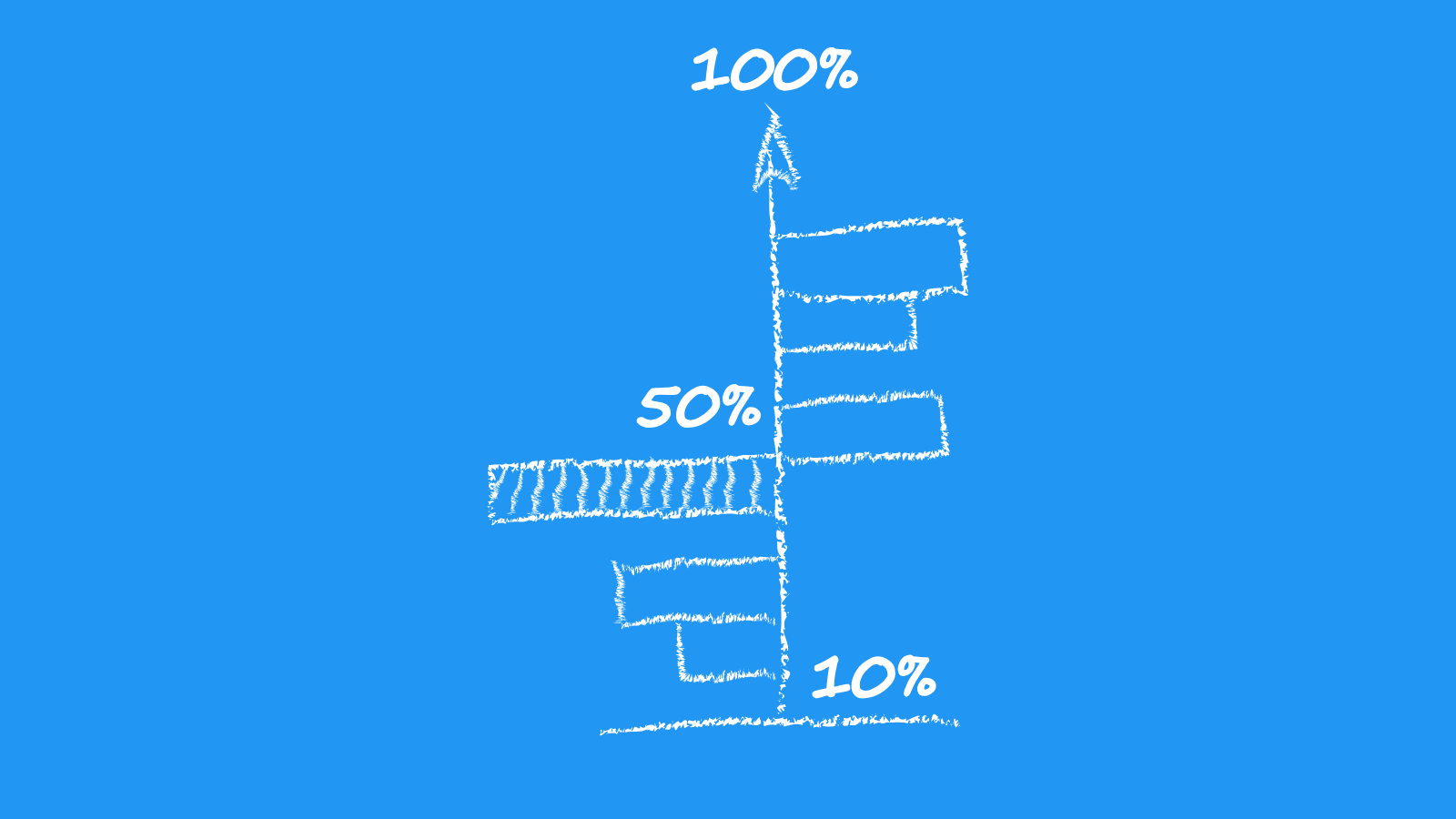
X axis: *Likelihood% (The higher the percentage value, the more likely the event will occur.)
Y axis: *Potential Impact% (The higher the percentage value, the more likely the price will deviate.)
Z axis (Grey to Black): *Technical Analysis%
S&P GSCI Gold Index: Financial Outlook and Forecast
The S&P GSCI Gold Index, a widely recognized benchmark for tracking the performance of gold futures contracts, presents a complex financial outlook influenced by a confluence of macroeconomic factors. Historically, gold has served as a traditional safe-haven asset, its demand often escalating during periods of economic uncertainty, geopolitical instability, and inflationary pressures. The current global economic landscape, characterized by persistent inflation in major economies, ongoing geopolitical tensions, and a complex interest rate environment, suggests a continued relevance for gold as a hedging instrument. Central bank policies, particularly regarding monetary tightening and their potential impact on currency valuations, will be a significant determinant of gold's performance. Furthermore, the evolving supply and demand dynamics within the physical gold market, including production levels and consumer demand from key regions, will contribute to the index's trajectory.
Looking ahead, the financial outlook for the S&P GSCI Gold Index is likely to be shaped by several key drivers. Inflationary expectations remain a primary consideration. If inflation proves to be more entrenched than anticipated, or if it experiences resurgences, gold's appeal as an inflation hedge is likely to be amplified. Conversely, a swift and successful taming of inflation by central banks could dampen this particular demand driver. The trajectory of global interest rates is another critical factor. As central banks potentially pivot from aggressive tightening to easing cycles, this could reduce the opportunity cost of holding non-yielding assets like gold, thereby increasing its attractiveness. However, the timing and pace of such pivots are subject to considerable uncertainty and will be closely monitored by market participants.
Geopolitical developments will continue to play a crucial role in the S&P GSCI Gold Index's performance. Heightened global tensions, trade disputes, or unexpected political crises can trigger flight-to-quality flows, directly benefiting gold. The index's sensitivity to these events underscores its role as a barometer of global risk sentiment. Moreover, the health of the U.S. dollar is intrinsically linked to gold prices. A weakening dollar typically supports higher gold prices as the commodity becomes cheaper for holders of other currencies. Conversely, a strengthening dollar can exert downward pressure on gold. The economic performance of major gold-consuming nations, particularly in Asia, will also influence demand and, consequently, the index's performance.
In terms of a forecast, the S&P GSCI Gold Index is poised for a generally positive outlook in the medium term, contingent on the persistence of inflationary pressures and a potential shift towards a more accommodative monetary policy environment. The ongoing geopolitical uncertainties further support a favorable disposition for gold. However, significant risks to this prediction exist. A rapid and sustained decline in inflation, coupled with aggressive and prolonged high interest rates, could considerably diminish gold's allure. Additionally, unexpected resolutions to major geopolitical conflicts could reduce safe-haven demand. The potential for a substantial strengthening of the U.S. dollar beyond current expectations also poses a notable downside risk.
| Rating | Short-Term | Long-Term Senior |
|---|---|---|
| Outlook | B2 | B2 |
| Income Statement | Baa2 | Caa2 |
| Balance Sheet | Ba2 | C |
| Leverage Ratios | B3 | Baa2 |
| Cash Flow | Caa2 | Ba3 |
| Rates of Return and Profitability | Caa2 | C |
*An aggregate rating for an index summarizes the overall sentiment towards the companies it includes. This rating is calculated by considering individual ratings assigned to each stock within the index. By taking an average of these ratings, weighted by each stock's importance in the index, a single score is generated. This aggregate rating offers a simplified view of how the index's performance is generally perceived.
How does neural network examine financial reports and understand financial state of the company?
References
- Wager S, Athey S. 2017. Estimation and inference of heterogeneous treatment effects using random forests. J. Am. Stat. Assoc. 113:1228–42
- Jorgenson, D.W., Weitzman, M.L., ZXhang, Y.X., Haxo, Y.M. and Mat, Y.X., 2023. Can Neural Networks Predict Stock Market?. AC Investment Research Journal, 220(44).
- Bai J, Ng S. 2017. Principal components and regularized estimation of factor models. arXiv:1708.08137 [stat.ME]
- K. Boda and J. Filar. Time consistent dynamic risk measures. Mathematical Methods of Operations Research, 63(1):169–186, 2006
- S. Bhatnagar, R. Sutton, M. Ghavamzadeh, and M. Lee. Natural actor-critic algorithms. Automatica, 45(11): 2471–2482, 2009
- Athey S, Imbens G. 2016. Recursive partitioning for heterogeneous causal effects. PNAS 113:7353–60
- V. Konda and J. Tsitsiklis. Actor-Critic algorithms. In Proceedings of Advances in Neural Information Processing Systems 12, pages 1008–1014, 2000