AUC Score :
Short-term Tactic1 :
Dominant Strategy :
Time series to forecast n:
ML Model Testing : Modular Neural Network (Market Direction Analysis)
Hypothesis Testing : Logistic Regression
Surveillance : Major exchange and OTC
1Short-term revised.
2Time series is updated based on short-term trends.
Key Points
Kolibri Global Energy Inc. is poised for potential growth driven by its ongoing development projects and exploration success, suggesting an upward trajectory in its stock value. However, risks are present, including volatility in commodity prices, which can significantly impact revenue and profitability. Additionally, operational challenges and regulatory hurdles in the energy sector pose potential headwinds that could affect project timelines and costs. The company's ability to effectively manage these risks will be crucial for realizing its predicted performance.About Kolibri Energy
Kolibri Global Energy is an independent energy company focused on the exploration and production of oil and natural gas. The company's primary operations are concentrated in the United States, with a strategic emphasis on developing its assets through efficient and responsible practices. Kolibri Global Energy is committed to maximizing shareholder value by growing its production base and enhancing its reserves. The company employs a disciplined approach to capital allocation and operational management, aiming to generate sustainable returns.
Kolibri Global Energy's business model revolves around identifying and developing undervalued assets with significant production potential. The company's portfolio is characterized by its focus on low-risk, high-return opportunities, often in mature basins where established infrastructure exists. This strategy allows Kolibri Global Energy to maintain a lean operational structure and focus on optimizing its existing resource base while strategically evaluating new growth prospects.
KGEI Stock Forecast Model for Kolibri Global Energy Inc.
We propose a comprehensive machine learning model to forecast the future performance of Kolibri Global Energy Inc. common stock (KGEI). Our approach integrates a variety of influential factors, acknowledging that stock market movements are driven by a complex interplay of internal company performance, broader economic conditions, and industry-specific trends. The model will leverage historical financial statements, including revenue, earnings, debt levels, and cash flow, to understand the company's fundamental health. Additionally, we will incorporate macroeconomic indicators such as GDP growth, inflation rates, interest rates, and unemployment figures, recognizing their pervasive impact on market sentiment and investor behavior. Furthermore, the model will analyze energy sector-specific data, including oil and gas prices, drilling activity, regulatory changes impacting the energy industry, and geopolitical events that could disrupt supply chains or influence demand.
Our forecasting methodology will employ a blended ensemble of machine learning algorithms to capture diverse predictive patterns. We will utilize time series analysis techniques, such as ARIMA and Prophet, to identify seasonality and long-term trends within KGEI's historical performance. To account for the influence of external factors, we will implement regression-based models like Lasso and Ridge regression, which effectively handle multicollinearity among predictor variables and penalize complexity. Moreover, the model will incorporate tree-based ensemble methods such as Random Forests and Gradient Boosting Machines (e.g., XGBoost), known for their ability to capture non-linear relationships and interactions between features. Sentiment analysis of relevant news articles and social media will also be integrated to gauge market perception and potential short-term price fluctuations.
The development and validation of this KGEI stock forecast model will involve rigorous backtesting and cross-validation procedures. We will meticulously evaluate model performance using appropriate metrics such as Mean Absolute Error (MAE), Root Mean Squared Error (RMSE), and R-squared to ensure predictive accuracy and reliability. Continuous monitoring and retraining of the model will be crucial to adapt to evolving market dynamics and maintain its efficacy. The insights derived from this sophisticated machine learning model are expected to provide actionable intelligence for strategic investment decisions related to Kolibri Global Energy Inc., enabling a more data-driven approach to navigating the complexities of the stock market.
ML Model Testing
n:Time series to forecast
p:Price signals of Kolibri Energy stock
j:Nash equilibria (Neural Network)
k:Dominated move of Kolibri Energy stock holders
a:Best response for Kolibri Energy target price
For further technical information as per how our model work we invite you to visit the article below:
How do KappaSignal algorithms actually work?
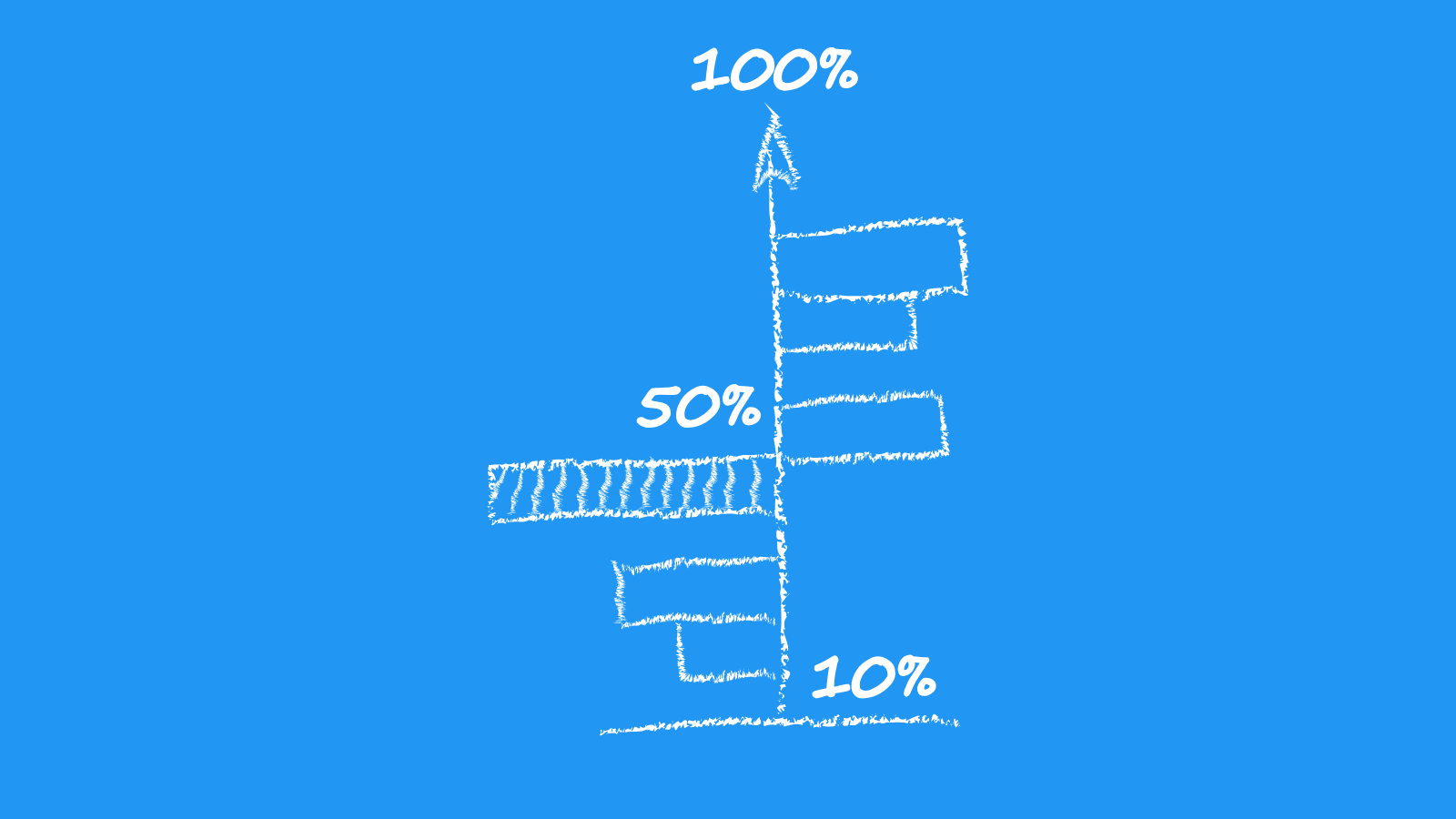
Kolibri Energy Stock Forecast (Buy or Sell) Strategic Interaction Table
Strategic Interaction Table Legend:
X axis: *Likelihood% (The higher the percentage value, the more likely the event will occur.)
Y axis: *Potential Impact% (The higher the percentage value, the more likely the price will deviate.)
Z axis (Grey to Black): *Technical Analysis%
Kolibri Global Energy Inc. Common Stock Financial Outlook and Forecast
Kolibri Global Energy Inc., hereafter referred to as Kolibri, operates within the oil and gas sector, primarily focusing on exploration and production. The company's financial health is intrinsically tied to commodity prices, operational efficiency, and its asset base. Recent performance has been influenced by the volatile nature of the energy markets. Key financial indicators to monitor include revenue generation from its producing assets, the cost of extracting hydrocarbons, and its capital expenditure plans for future development and exploration. Understanding Kolibri's balance sheet, particularly its debt levels and liquidity, is crucial in assessing its ability to navigate market fluctuations and fund growth initiatives. The company's strategic decisions regarding asset acquisition, divestiture, and production optimization will significantly shape its financial trajectory.
The outlook for Kolibri's common stock is contingent on several macroeconomic and industry-specific factors. A sustained period of higher oil and gas prices would undoubtedly provide a tailwind, boosting revenue and profitability. Conversely, price downturns present a significant headwind. Operational success, such as achieving targeted production levels and controlling lifting costs, is paramount. Kolibri's management team's ability to effectively allocate capital, whether towards developing existing reserves or pursuing new opportunities, will be a critical determinant of future performance. Furthermore, the company's approach to environmental, social, and governance (ESG) factors is becoming increasingly important for investor sentiment and access to capital, which could indirectly impact its financial standing.
Forecasting Kolibri's financial future involves analyzing its reserve reports, production forecasts, and cost structures. Analyst consensus and company guidance provide insights into expected revenue growth and profitability margins. However, it is essential to acknowledge the inherent uncertainty in such projections, particularly in an industry susceptible to geopolitical events, regulatory changes, and technological advancements. The company's ability to maintain and grow its production base while managing operating expenses will be a key driver of its financial success. Investors should also consider the company's hedging strategies, which can mitigate some of the price volatility but may also limit upside participation in a rising market.
The financial outlook for Kolibri Global Energy Inc. common stock appears cautiously optimistic, contingent on stable to rising commodity prices and effective operational execution. A key risk to this positive outlook is a significant and prolonged decline in oil and gas prices, which could severely impact revenue and profitability, potentially leading to a negative financial trajectory. Another significant risk stems from execution challenges in exploration or development projects, such as encountering lower-than-expected reserves or facing cost overruns. Furthermore, increasing regulatory scrutiny or unexpected environmental liabilities could introduce substantial financial burdens and negatively affect the company's long-term prospects.
| Rating | Short-Term | Long-Term Senior |
|---|---|---|
| Outlook | B3 | B2 |
| Income Statement | Caa2 | C |
| Balance Sheet | Baa2 | Caa2 |
| Leverage Ratios | C | B2 |
| Cash Flow | Caa2 | B1 |
| Rates of Return and Profitability | C | Caa2 |
*Financial analysis is the process of evaluating a company's financial performance and position by neural network. It involves reviewing the company's financial statements, including the balance sheet, income statement, and cash flow statement, as well as other financial reports and documents.
How does neural network examine financial reports and understand financial state of the company?
References
- D. White. Mean, variance, and probabilistic criteria in finite Markov decision processes: A review. Journal of Optimization Theory and Applications, 56(1):1–29, 1988.
- Babula, R. A. (1988), "Contemporaneous correlation and modeling Canada's imports of U.S. crops," Journal of Agricultural Economics Research, 41, 33–38.
- Bamler R, Mandt S. 2017. Dynamic word embeddings via skip-gram filtering. In Proceedings of the 34th Inter- national Conference on Machine Learning, pp. 380–89. La Jolla, CA: Int. Mach. Learn. Soc.
- Byron, R. P. O. Ashenfelter (1995), "Predicting the quality of an unborn grange," Economic Record, 71, 40–53.
- Andrews, D. W. K. W. Ploberger (1994), "Optimal tests when a nuisance parameter is present only under the alternative," Econometrica, 62, 1383–1414.
- Hastie T, Tibshirani R, Wainwright M. 2015. Statistical Learning with Sparsity: The Lasso and Generalizations. New York: CRC Press
- Thompson WR. 1933. On the likelihood that one unknown probability exceeds another in view of the evidence of two samples. Biometrika 25:285–94